Parchis CLUB - Pro Ludo
- 4.4
- Rating
- 10.00M
- Installs
- Free
- Price

 Analysis by App-foxy
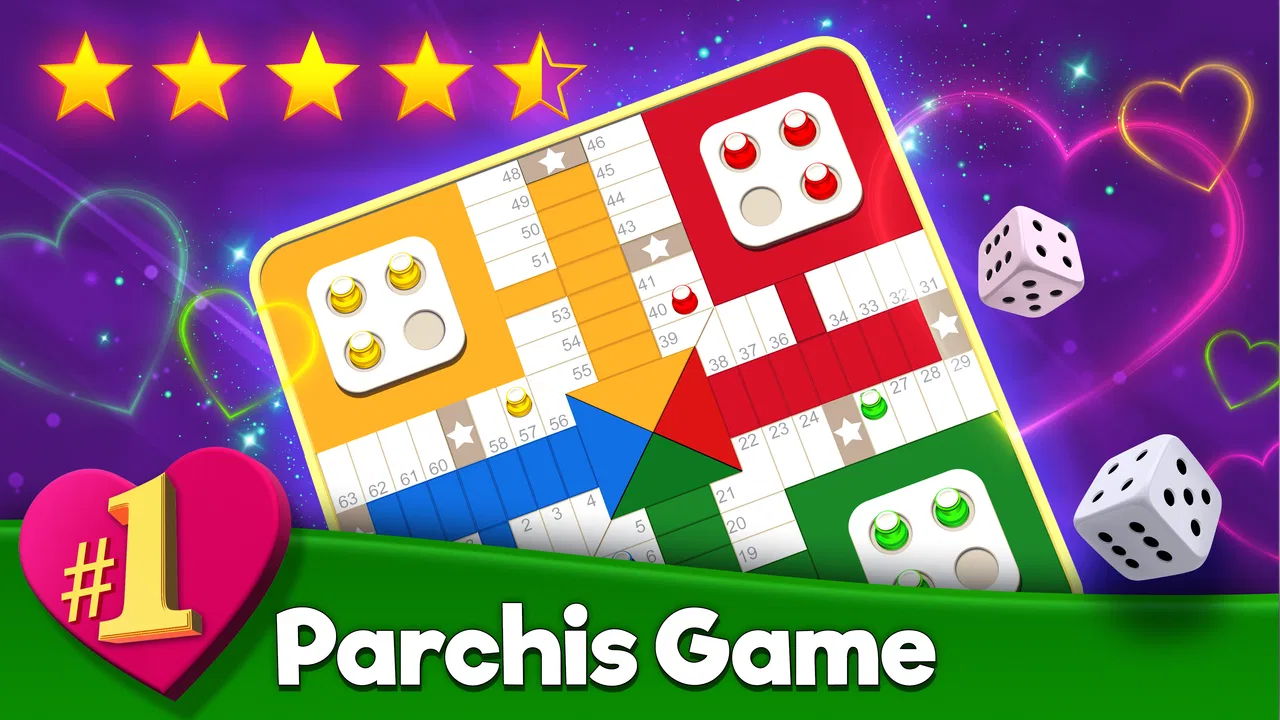
I approached Parchis CLUB - Pro Ludo as the kind of board game I could open when I wanted a quick social break rather than a long, demanding session. It is a free ludo game from Moonfrog, built around online matches, familiar dice-driven movement, and the simple pleasure of trying to send my pieces safely around the board. The appeal is immediate: I do not need to learn a complicated rulebook before playing, and the board remains easy to understand even when I am chatting with other players.
That simplicity is also the main decision to make. If you want a relaxed online ludo game for casual matches with friends, this is an easy candidate to try. If you are searching for a deeply strategic board game, a quiet offline experience, or a completely purchase-free environment, I would look more carefully at alternatives before settling in. My experience is that Parchis CLUB works best when treated as a light social game, not as a serious replacement for every kind of digital board game.
What I considered before recommending it
The first question is whether you enjoy luck-based board games. Dice rolls naturally influence the pace, so even a sensible move can be followed by an unhelpful turn. I found that the fun comes from managing those uncertain moments: choosing which piece to move, deciding whether to advance safely or take a risk, and reacting when another player changes the position of the board. Someone who dislikes random outcomes may find the same feature frustrating rather than exciting.
You May Also Like

 Pandora - Music & Podcasts
Pandora’s Music Is Easy to Start, but Harder to Recover
Pandora’s strength is its low-effort path from a seed to a station. Its weak spot is how much confidence it asks you to place in connection, setup, and quiet recovery.

 AccuWeather: Weather Radar
AccuWeather Review: A Quick, Clear Forecast for Everyday Decisions
For everyday plans, the best forecast is the one you can understand quickly. AccuWeather makes rain timing, radar, and local conditions easy to act on, with a few trade-offs.

 Hill Climb Racing
Why Hill Climb Racing Still Turns Crashes Into One More Run
A tiny car, a bumpy hill and one more upgrade: Hill Climb Racing keeps resurfacing because its simple chaos makes every near-miss feel personal.

 AliExpress - Shopping App
AliExpress Makes Global Shopping Feel Personal, but Shoppers Bear the Risk
AliExpress turns a global marketplace into a pocket-sized discovery engine. Its reach is useful, its shopping loop compelling, and its trade-offs easy to miss.

 Lords Mobile: Kingdom Wars
Lords Mobile Is a Kingdom-Building Routine, Not a Quick Match
A case-by-case verdict on the building, battles, device demands, and social commitments that make Lords Mobile rewarding for some players and exhausting for others.

 PDF Scanner app - TapScanner
TapScanner Makes Paperwork Easier to Capture, Check, and Share
TapScanner makes scanning with a phone feel less like a rescue operation and more like a dependable step in getting work done. Its capture tools are useful, though not flawless.
More From Our News Desk
View All News


The second question is how important social interaction is to you. The game is presented as a way to play and chat, and that changes the experience compared with a solo puzzle. I liked having the option to make a match feel more personal instead of staring at a silent board. At the same time, anyone who wants a fully private, distraction-free session may prefer a traditional offline ludo app.
I also considered how quickly a new player can understand the controls. Ludo is approachable because the objective and board layout are familiar to many people, but a digital version still needs to make turn selection feel clear. In practice, the game is most comfortable when I slow down for a moment and check which piece gives me the best position instead of tapping immediately. That small habit matters more than memorizing complicated tactics.
For families, the age rating of Everyone makes the game easier to consider as a general-purpose board option. I would still supervise younger players around chat and purchases, as I would with any connected game. The title is free to start, but it includes in-app purchases ranging from $0.49 to $899.99 per item. That does not automatically make it a bad choice, yet it is a good reason to set device purchase controls before handing a phone to a child.
How a normal session feels
A realistic use case is a short evening break while waiting for a friend or family member to finish dinner. I can open the game, join a match, and focus on a few decisions without committing to a large campaign or a complicated setup. The board gives the session a clear beginning and end, which makes it more suitable for spare moments than games that expect extended attention.
Another useful situation is a remote get-together. When people cannot sit around the same physical board, an online ludo match gives the group a shared activity that is easier to explain than a new card or strategy game. The chat element can help keep the conversation going, although I would not choose this as a substitute for a private messaging app. The game is at its best when conversation supports the match rather than becoming the entire purpose.
My practical tip is to agree on expectations before inviting less experienced players. Ludo can look entirely casual, but players may have different ideas about whether they should take aggressive moves or play defensively. A quick explanation that dice luck is part of the experience prevents a new player from feeling that every setback is a personal mistake. It also makes the match friendlier when someone loses a piece at an inconvenient moment.
Where the game earns its place
The strongest advantage is accessibility. Parchis CLUB does not ask me to study a large collection of cards, character abilities, or exceptions before I can participate. Its board-game identity is clear, and the familiar ludo format makes it suitable for people who want something social without a long learning curve. That makes it a sensible first choice for a mixed group in which some players are regular gamers and others rarely play on a phone.
The online focus is another meaningful strength. A physical ludo board is excellent when everyone is in the same room, but that condition is not always available. Here, the digital format removes the need to arrange pieces, check whose turn it is, or find a large table. I particularly appreciate that the game can serve as a small shared ritual: a quick match after work, a family challenge across distance, or a casual way to reconnect with a friend.
The ability to chat while playing also gives the game more personality than a purely automated board. A match can become a conversation with turns attached, rather than a series of isolated taps. I would use that feature most with people I already know. With unfamiliar players, I would keep the interaction measured and avoid treating the chat as a guaranteed part of the entertainment.
There is also value in the game’s low commitment. I do not need to build a long-term strategy around a complicated progression system to enjoy one session. That is useful when my attention is limited or when I want a familiar activity after a busy day. The trade-off is that players who need constant novelty may eventually find the basic ludo loop less satisfying than a broader board-game collection.
Small decisions that improve the experience
One of the easiest mistakes is moving the first available piece automatically. I get better results when I look at the whole board first. A move that seems attractive because it advances a piece may leave another piece exposed or waste a chance to create a stronger position. I do not treat every turn as a puzzle, but taking a few seconds to compare options makes the game feel more interactive than simply following the most obvious tap.
A second tip is to separate emotional decisions from useful decisions. When another player threatens one of my pieces, my first reaction is usually to chase them or take a risky route. Sometimes that works, but protecting progress can be wiser than trying to answer every attack. This is a small but important distinction: the dice create uncertainty, while the choice of piece is where I can still exercise judgment.
I also recommend keeping the social tone in mind. Because the game is designed around friends and chat, a match can become unpleasant if players treat every move as a personal contest. For a family session, I would focus on conversation and playful rivalry. For a more competitive group, I would agree beforehand that luck and setbacks are normal. That approach makes the game more welcoming without pretending that every outcome will feel fair.
Finally, I would check purchase settings before regular use. The free entry point is convenient, but the available purchase range is unusually broad, so I would not leave spending entirely to impulse. This is especially relevant when the game is installed on a shared device. A few minutes of preparation can prevent an otherwise enjoyable casual game from creating an unwanted billing problem.
How it compares with other board-game choices
Compared with a physical ludo board, Parchis CLUB wins on convenience and distance. I do not need to find a table, store pieces, or wait until everyone is physically present. The physical version still has an advantage for face-to-face gatherings, especially when people want to talk without looking at separate screens. If the main goal is a shared room activity, a real board may feel warmer and more natural.
Compared with offline ludo apps, this game is more appealing when my priority is online interaction. An offline alternative may be a better fit for travel, limited connectivity, or a child who should not be using chat. I would choose the offline route when I want predictable solo play and no social layer. Parchis CLUB makes more sense when the presence of other players is part of the reason I am opening it.
Compared with complex digital board games, the game is easier to teach but offers less variety in the moment-to-moment structure. A strategy-heavy title may reward planning across several systems, while this one keeps attention on movement, risk, and timing. I prefer Parchis CLUB for a quick group match and a deeper strategy game for a longer session in which I want decisions to matter more than dice luck.
Compared with card games, the board layout gives ludo a more visible sense of progress. I can see pieces moving toward their destination and understand the general state of the match at a glance. Card games may offer more surprise through changing hands and combinations, while this game keeps the rules more transparent. The better choice depends on whether I want clear board position or more varied card-driven possibilities.
Players should also think about the social environment they want. A connected game can make it easier to meet or play with others, but it can also introduce interruptions and interactions I would not encounter in a solitary app. If I am tired and want a calm few minutes, I reach for a quiet puzzle instead. If I want a familiar contest with friends, the online format becomes a genuine advantage.
Free access, purchases, and the cost of changing apps
Because the game is free, trying it does not require an upfront purchase. That lowers the cost of testing whether the board, pace, and social style suit me. I would begin with a few normal matches rather than buying anything immediately. The important question is not whether optional spending exists, but whether I can enjoy the core experience without feeling pushed to spend.
The listed purchase range means families and careful spenders should be deliberate. I would use device-level purchase protection and explain to younger players that free installation does not mean every item inside the game is free. This is not a reason for me to reject the title automatically, but it is a real part of the decision and should be considered before inviting children to play unsupervised.
Switching away is easy if the format does not suit you: a player can simply return to an offline board game, a physical set, or a more strategic alternative. The harder cost is social. If friends already use this game for regular matches, moving to another app means convincing everyone to install something else and learn its controls. That makes the title more valuable for an existing group than for someone who plays entirely alone.
There is also a time cost in finding the right alternative. A more elaborate board game may offer deeper systems, but it can require explanations, longer sessions, or more attention from every participant. If my group only has a short window, the simplicity of Parchis CLUB may be more useful than theoretical depth. I would switch only when the current format’s limitations repeatedly outweigh its convenience.
Technical expectations and everyday suitability
The game supports devices running Android 7.0 or later, which gives it a broad place on many older compatible phones. The current version is 0.2.59. Before installing, I would still check that the device has enough free space and that online play fits the connection available at the time. I would not plan an important group match around unreliable connectivity, because a social board game loses much of its appeal when turns become interrupted.
Moonfrog has positioned the title clearly as a board game rather than a complicated multi-genre product. Its average rating is 4.4 from around 50 thousand ratings, and it has passed 10 million installs. Those figures suggest that the concept has reached a substantial audience, but they should not replace personal testing. A popular ludo game can still be the wrong fit for someone who dislikes chat, dice-based outcomes, or optional purchases.
The Everyone rating makes it approachable, yet age suitability is not the same as suitability for every situation. I would consider the player’s comfort with online interaction, the device’s purchase settings, and whether the person understands that matches may not always be quick or predictable. For an adult who wants a relaxed social game, those concerns are usually manageable. For a young child using a shared phone, I would add supervision.
My recommendation after weighing the trade-offs
I recommend Parchis CLUB to people who want a recognizable ludo experience with online play and chat, especially when they already have friends or relatives willing to join. It is approachable, free to try, and well suited to short social sessions. The game does not need to pretend to be more complicated than it is; its value comes from making a familiar board easy to play across distance.
I would skip it if I wanted a fully offline game, a serious strategy challenge, or a completely controlled environment with no purchase considerations. In those cases, a physical ludo set, an offline board app, or a deeper strategy title would probably serve me better. I would also avoid making it my only mobile game if I need a lot of changing content, because the core appeal is the repeatable match rather than a broad collection of unrelated activities.
For a first session, my advice is simple: play without spending, invite someone you know, and pay attention to whether the dice-driven pace feels relaxing or irritating. Try making deliberate moves instead of tapping automatically, and agree on a friendly chat style before the match begins. That gives a much clearer impression than judging the game from its familiar name alone.
My final view is positive but specific: this is a convenient social ludo choice, not a universal board-game solution. When I want a quick contest with recognizable rules and a friend on the other side of the screen, it earns a place on my device. When I want quiet concentration, richer strategy, or a screen-free family gathering, I choose something else. That balance is exactly why I would recommend it to the right player rather than to everyone.
FAQs for Parchis CLUB - Pro Ludo
01What is Parchis CLUB - Pro Ludo, and how is it played?
Parchis CLUB - Pro Ludo is a digital board game based on the classic Parchis and Ludo experience. You move your pieces around the board by rolling dice, trying to take them from the starting area to the home section before your opponents. The game is designed for casual matches and combines familiar rules with a colorful interface, competitive turns, and online or local-style multiplayer options depending on the available mode.
02Can I play Parchis CLUB - Pro Ludo with friends or other players online?
Yes, the main appeal of Parchis CLUB - Pro Ludo is its multiplayer experience. You can generally compete against friends, family members, or other players through supported online game modes. Before downloading, remember that multiplayer features may require an internet connection, and the quality of a match can depend on your network stability, the number of active players, and the game’s current server availability.
03Is Parchis CLUB - Pro Ludo free to download and play?
Parchis CLUB - Pro Ludo can typically be downloaded without an upfront purchase, allowing you to try the basic gameplay before spending money. However, free mobile games may include advertisements, optional purchases, virtual currency, cosmetic content, or other paid features. We recommend checking the store listing for the latest pricing details and reviewing purchase settings, particularly if children will be using the device.
04Does Parchis CLUB - Pro Ludo require an internet connection?
An internet connection is usually important for online matches, player rankings, social features, and account-related functions in Parchis CLUB - Pro Ludo. Some versions or modes may offer limited offline play against computer-controlled opponents, but availability can vary by platform and update. If you mainly want to play while traveling or without mobile data, verify the current offline options before installing the game.
05Is Parchis CLUB - Pro Ludo suitable for children and beginners?
The basic rules are simple enough for beginners, making Parchis CLUB - Pro Ludo approachable for families and players who already know traditional Ludo-style games. Nevertheless, parents should review the game’s age rating, advertising, chat or social features, and in-app purchase options before allowing children to play. New users may also need a few matches to understand strategic moves, safe positions, and the effects of capturing opponents’ pieces.
Pros
- Quick matchmaking keeps games moving with little waiting.
- Private rooms make it easy to play with friends and family.
- Simple controls are suitable for casual players of all ages.
- Multiple game modes add variety beyond standard Parchis matches.
- Lightweight gameplay runs smoothly on many Android and iOS devices.
Cons
- Random matchmaking can pair you with players of very different skill levels.
- Some features may require watching ads or making in-app purchases.
- Online play depends on a stable internet connection.
- Chat and player interactions may need moderation in public rooms.
- Luck has a major influence
- which may frustrate strategy-focused players.

Parchis CLUB - Pro Ludo
Gallery